Professional Standpipe
Installation Services in Connecticut
Standpipes are vertical pipes running through a building with hose connections on each floor. They exist for one reason. When the fire department arrives at a building too tall for hose lines to be run up the stairs, the standpipe gives them water on every floor. Royal Fire Protection has installed standpipe systems in Connecticut commercial and high-rise buildings since 2023. From mid-rise office buildings in Hartford to warehouses in Bristol to multi-story residential in Stamford. The work follows NFPA 14, the standard that governs every aspect of standpipe design, installation and testing.
Connecticut requires standpipe systems in most buildings over a certain height, in buildings with large floor plates, and in buildings with specific occupancy classifications. The system has to deliver water at the design pressure to the most remote hose connection on the highest floor. That demand drives the design. Pipe size, riser configuration, fire pump requirements and the location of every hose valve all come out of the hydraulic calculation.
There are three classes of standpipe systems and Royal Fire Protection installs all three. Class I systems serve the fire department with 2.5 inch hose connections. Class II systems serve occupants with 1.5 inch hose stations. Class III systems combine both. We coordinate with the local AHJ at the start of every project.
New Standpipe System Installation
New standpipe installation begins with the hydraulic demand calculation. NFPA 14 sets the minimum design flow for each class of standpipe. Class I systems require 500 gallons per minute at the most remote hose connection with 100 psi residual pressure. Class II systems require 100 gallons per minute at 65 psi. Class III combines the two. Multiple risers in a building each have to deliver this minimum, with additional flow required when more than one riser is in operation simultaneously. The demand calculation runs first, then the riser layout follows.
Riser routing through a Connecticut building involves coordination with the architect and the structural engineer. The riser usually runs in a dedicated fire-rated shaft. Royal Fire Protection coordinates riser locations during the design phase, before the building is closed in. Late changes to riser locations cost real money and delay the project. Getting the layout right at the start prevents the problem.
Installation includes the riser piping, hose valves at each floor landing, fire department connections at the building exterior, isolation valves, drain valves and the gauges and signage NFPA 14 requires. After installation comes the hydrostatic pressure test and the flow test at the most remote hose valve. Both have to pass before the system goes into service.
Wet, Dry and Manual Standpipe Systems
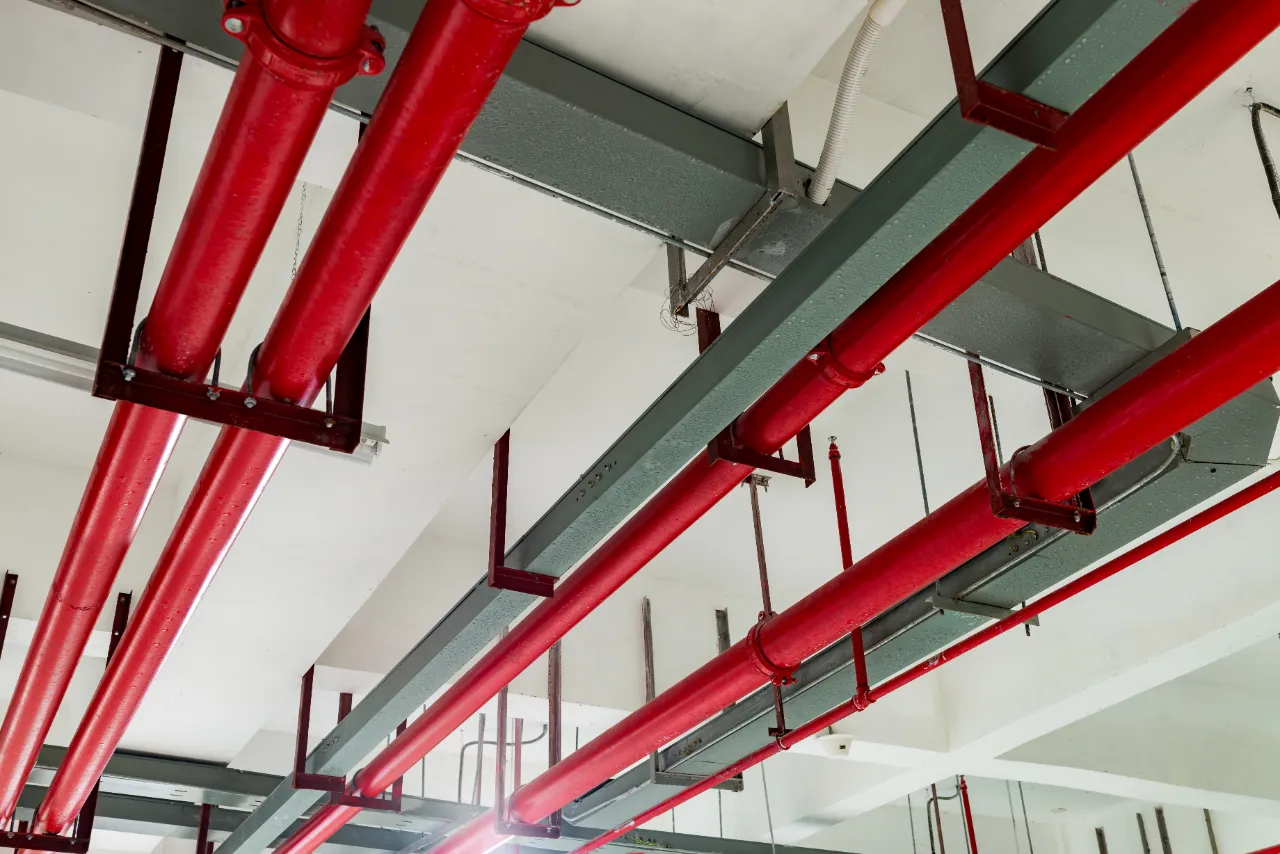
Filled with water at all times. When the fire department opens a hose valve, water flows immediately. Most Connecticut commercial high-rise buildings use wet automatic standpipe systems — the most common and most reliable configuration.
Filled with pressurized air. Required in unheated parts of buildings where wet standpipes would freeze. Parking garages, exterior fire escape standpipes and unheated stair towers all use dry configurations in Connecticut.
No permanent water supply. The fire department connects to the FDC at the building exterior and pumps water in from their apparatus. Used in some lower-hazard buildings where automatic water supply is not required.
Why Standpipe Installation Quality Matters in Connecticut
A standpipe system that does not deliver design flow at design pressure does not work. The fire department arrives, connects to a hose valve, opens the valve, and gets a trickle instead of the gallons per minute they need to fight the fire. Connecticut fire marshals know this, which is why standpipe acceptance testing is rigorous. The flow test at the most remote hose valve has to demonstrate the system delivers the NFPA 14 minimum at the design pressure. Pass the test, get the certificate.
Pipe sizing and fire pump coordination are where most standpipe problems start. The standpipe demand has to be added to the sprinkler system demand when both are fed from the same fire pump and supply. An undersized pump or undersized supply piping cannot deliver both demands simultaneously. Royal Fire Protection runs the combined hydraulic calculation for buildings with both standpipes and sprinklers.
Hose valve placement matters too. NFPA 14 requires every floor area to be within reach of a standpipe hose connection, with the hose length not exceeding the code maximum. Buildings with large floor plates need multiple risers to meet this requirement. Royal Fire Protection lays out hose valve locations during the design phase, with the local fire department reviewing the placement before installation begins.
Every standpipe installation includes hydrostatic pressure testing and flow testing at the most remote hose valve. Results are documented for the fire marshal. No system goes into service until both tests pass.
Benefits of Professional
Standpipe Installation in CT
A properly designed and installed standpipe system gives the Connecticut fire department the water they need to fight fires in your building. Here is what professional installation delivers.
Get Free EstimateNFPA 14 compliant standpipe design sized to actual building demand and coordinated with sprinkler system flow. Every calculation documented and submitted for permit review.

Class I, II and III standpipe configurations matched to building occupancy and local fire department preference. All classes installed by one licensed crew.
Wet, dry and manual standpipe systems installed for heated, unheated and lower-hazard occupancy applications throughout Connecticut.
Hose valve placement and fire department connection location coordinated with the local AHJ during design phase. No surprises at acceptance testing.
Hydrostatic pressure testing and flow testing performed at acceptance with results documented for the fire marshal. Certificate issued on passing.
Coordination with fire pump installation for buildings that require pumped standpipe water supply and pressure. Combined hydraulic calculation included.
Complete documentation, signage and tagging delivered at handover for code compliance and future inspections. Records ready for fire marshal review.
Every standpipe project starts with a site walkthrough and a free written estimate. Call to schedule a visit anywhere in Connecticut.
(475) 341-9369
Why Connecticut Property Owners Choose
Royal Fire Protection for Standpipe Installation
Licensed and Insured
Connecticut-licensed fire protection contractor. Fully insured. Every standpipe stamped, permitted, pressure tested and flow tested in front of the fire marshal.
20+ Years Team Experience
Royal Fire Protection has installed standpipe systems in Connecticut since 2023. High-rise, warehouse, multifamily and commercial buildings. Every standpipe class.
Free Written Estimates
Every project begins with a site walkthrough and a written estimate. Hydraulic demand calculations included, no obligation to move forward.
Schedule Your Free
Standpipe Installation
Estimate in Connecticut
Tell us about your building, your height, your occupancy and your timeline. A licensed estimator responds within one business day with a written, no-obligation quote.
One Contractor. Full Scope.
From hydraulic calculations and permit submission to hydrostatic testing and fire marshal sign-off — every step handled by the same licensed Connecticut crew.
Other Fire Protection
Services We Offer in Connecticut
Fire Sprinkler Installation
New sprinkler installation for Connecticut commercial and industrial buildings. Wet, dry, preaction and deluge systems designed and installed to NFPA 13.
Learn MoreFire Pump Installation
Fire pumps for high-rise, warehouse and industrial buildings. Designed, installed and tested under NFPA 20 requirements statewide.
Learn MoreSprinkler System Inspection
Annual fire sprinkler inspection and testing in Connecticut. Detailed written reports, code compliance and full documentation for property owners.
Learn MoreSystem Service and Repair
Service and repair for sprinkler systems and fire pumps. Leak repair, valve replacement, head replacement and response calls statewide.
Learn MoreFire Extinguisher Service
Fire extinguisher installation, annual inspection, recharge and replacement for Connecticut businesses. Units sized and placed by occupancy code.
Learn MoreBackflow Device Installation
Backflow prevention device installation and testing for Connecticut commercial properties. Required equipment for water utility and code compliance.
Learn More