Sprinkler Leak in Your Commercial Building:
What to Do First

Step 1: Locate the Sprinkler System Main Shutoff
Every commercial fire sprinkler system has a main control valve. It is usually located near where the water service enters the building, often in a riser room, basement utility area or near the fire department connection. The main control valve is typically a wheel-handle gate valve or a butterfly valve with a tamper switch.
Close the valve to stop water flow to the sprinkler system. If your building has multiple zones, close only the affected zone control valve instead of the main.
The fire alarm panel will likely trip when you close the valve. Notify your monitoring company immediately to prevent unnecessary fire department dispatch.
Record the exact time you closed the valve. This information is needed for the inspection report, insurance claim and fire marshal documentation.
Step 2: Control Water Damage Already in Progress
Even after closing the main control valve, water remains in the piping above the leak point. That water will continue to drain through the leak until the system depressurizes. Place buckets, tarps or wet vacuums under the active drip points to capture water.
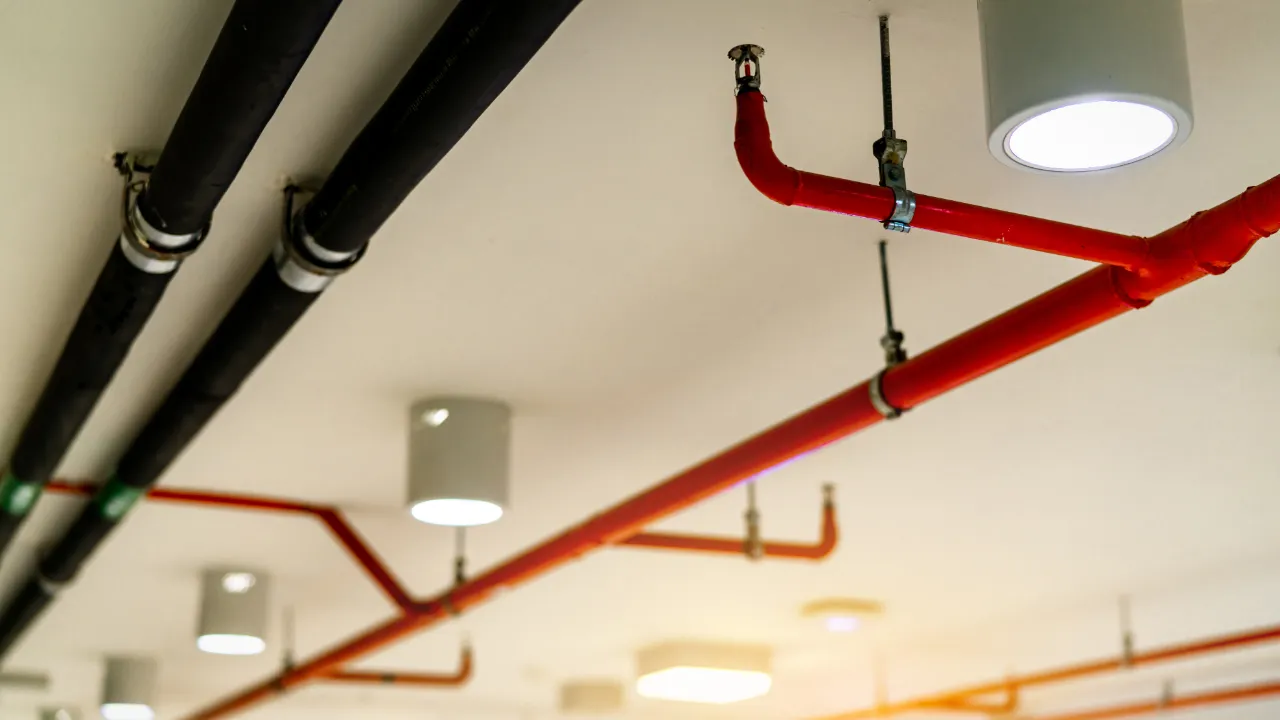
Take photos of the damage for your insurance claim. Most commercial property insurance policies cover water damage from a sprinkler system failure. Documentation in the first hour helps the claims process move faster and protects your position with the carrier.
Move inventory, electronics, files and furniture away from the affected area. If water has reached carpet, drywall or ceiling tiles, contact a water damage restoration contractor right after you call your fire protection contractor.
Step 3: Call a Licensed Fire Protection Contractor
Do not try to repair a commercial sprinkler leak yourself, even if the leak looks small. Connecticut licensed fire protection contractors carry the credentials, pressure testing equipment and replacement parts needed to repair the system to NFPA 13 installation standards and NFPA 25 inspection compliance.
When you call, give the contractor specific information: building address, type of leak, approximate location in the building, whether you closed the main control valve, and whether the fire alarm has tripped. Specific information lets the contractor arrive with the right parts and equipment. Royal Fire Protection responds to Connecticut commercial sprinkler leak calls statewide from our Prospect base.
Step 4: Investigate the Root Cause After Repair
Once the leak is repaired and the system is back in service, find out why the leak happened. Common causes for Connecticut commercial sprinkler leaks include:
Bridgeport and Norwalk waterfront buildings face salt-air corrosion that accelerates sprinkler component failure compared to inland buildings.
Danbury unheated industrial spaces are common sources of freeze damage calls during cold Connecticut winters.
Pinhole leaks in older mill conversion piping in Waterbury and New Haven are common. Annual NFPA 25 inspections often catch these before water damage occurs.
If your building has older piping with multiple recent leaks, consider a full system inspection under NFPA 25 to identify other failure points before they leak. Annual sprinkler inspections often catch the early signs of failure before water damage happens.
Frequently Asked Questions
A single open sprinkler head can discharge 20 to 30 gallons per minute. That is over a thousand gallons of water in an hour. Even a small pinhole leak in a charged sprinkler pipe can produce hundreds of gallons over a few hours before discovery.
Yes. Closing the main control valve to stop a leak is the right action when water damage is in progress. The fire alarm will trip when you close the valve. Notify your fire alarm monitoring company immediately to prevent unnecessary fire department dispatch.
Most commercial property insurance policies cover water damage from accidental sprinkler system failure. Document everything with photos right away, save the contractor invoice and report the claim within the carrier's required timeframe. Coverage varies, so check your specific policy.
Coastal corrosion in Long Island Sound waterfront buildings, freeze damage in unheated industrial spaces during cold winters, aging mill conversion piping with pinhole leaks, gasket failures in older alarm valves and physical damage from tenant build-outs are the most common causes statewide.
Annual NFPA 25 inspection catches early signs of failure before they leak. Address aging piping, corroded sprinkler heads and failing gaskets during scheduled service rather than waiting for emergency repair. Building winter readiness for cold-weather spaces also prevents most freeze damage calls.
Small repairs like replacing a single sprinkler head or a section of pipe typically take a few hours including pressure testing. Larger repairs involving alarm valves, fire pump components or multiple sprinkler heads can take a full day depending on access and parts availability.
Need Emergency Sprinkler Repair in Connecticut?
Call Royal Fire Protection for fast sprinkler leak response statewide. Licensed Connecticut crew, parts inventory in Prospect and same-day diagnostic visits on most calls.